Objectives and Structure

About

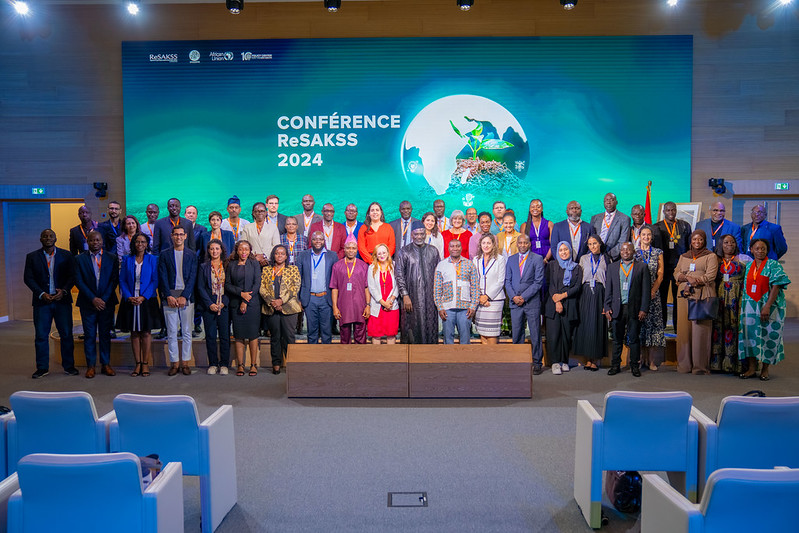
AKADEMIYA2063, in partnership with the African Union Commission Department of Agriculture, Rural Development, Blue Economy, and Sustainable Environment (AUC-DARBE), is convening the 2026 ReSAKSS Annual Conference to launch the 18th Edition of the Annual Trends and Outlook Report (ATOR). This year’s conference will take place online on December 8–10 under the theme “The Role of Governance in Advancing Africa’s Agrifood Systems Transformation.” The 2026 ReSAKSS Conference will bring together policymakers and state and non-state actors to examine the report’s key findings and policy recommendations. As Africa embarks on the implementation of the Kampala CAADP Declaration for 2026–2035, strengthening agrifood systems governance is essential to achieving the continent’s transformation objectives. The 2026 ATOR examines the governance frameworks, institutional arrangements, policy instruments, and country experiences needed to translate political commitments into effective action. The conference will provide a platform to discuss practical approaches to strengthening evidence-based decision-making, institutional coordination, policy coherence, and mutual accountability to advance the implementation of the Kampala CAADP agenda at national, regional, and continental levels.

Read More
Objectives

The 2026 ReSAKSS Conference will convene agrifood systems stakeholders to examine and apply evidence from the 2026 ATOR to strengthen governance for Africa’s agrifood systems transformation.

The conference will seek to:

• Share the findings of the 2026 ATOR and examine the conceptual and practical links between governance and agrifood systems transformation.

• Discuss different governance models and institutional arrangements that support inclusive, resilient, and sustainable agrifood systems, drawing on evidence and best practices from African countries and beyond.

• Strengthen dialogue and coordination among continental, regional, national, and non-state actors around Kampala CAADP implementation.

• Assess the status of CAADP implementation and progress toward achieving key goals and targets.

Read More
Structure

The three-day event will gather a diverse group of researchers, policymakers, development partners, non-state actors, and thought leaders in the agrifood system transformation space from Africa and beyond, in a format that facilitates stakeholder dialogue and networking.

Day 1 sets the stage with framing remarks, an overview of the 2026 ATOR, a high-level panel on why governance matters, and a first roundtable on the report’s conceptual foundations.

Day 2 focuses on the governance of natural resources, markets, and innovation.

Day 3 shifts from evidence to action, covering country experiences and CAADP implementation, followed by a high-level closing panel.

Read More

Download the 2026 ReSAKSS Conference Concept Note

Conference Agenda

Part I

Setting the Stage Governance and Agrifood Systems Transformation

Welcome and Housekeeping

Host and MC: Dr. Layih Butake, Director, Communications and Outreach, AKADEMIYA2063

Opening Remarks

• Dr. Ousmane Badiane, Executive Chairperson, AKADEMIYA2063

• Ms. Constanze Neher, Head of Division, Sustainable Supply Chains, Agricultural and Food Systems, German Federal Ministry for Economic Cooperation and Development (BMZ)

• Mr. Obai Khalifa, Deputy Director, Agricultural Development, Africa, Gates Foundation

• H.E. Moses Vilakati, Commissioner, African Union Commission, Department of Agriculture, Rural Development, Blue Economy, and Sustainable Environment (AUCDARBE)


Framing Remarks: Governance and Africa’s Agrifood Systems Transformation

• Dr. Debisi Araba, Managing Director, AKADEMIYA2063

• Ms. Alice Ruhweza, President, AGRA

• Dr. Abebe Haile-Gabriel, Assistant Director-General and Regional Representative for Africa, FAO

Overview of the 2026 Annual Trends and Outlook Report (ATOR)

Prof. Christian Henning, Chief Scientist, AKADEMIYA2063; Co-Editor, 2026 ATOR

High-Level Panel: Why Governance Matters for Africa’s Agrifood Systems Transformation

Chair and Moderator: Ambassador Ertharin Cousin, CEO and Managing Director, Food Systems for the Future (FSF) Institute; Vice Chair, AKADEMIYA2063 Board of Trustees

• Hon. Dr. Telesphore Ndabamenye, Minister of Agriculture and Animal Resources, Rwanda

• Hon. Dr. Cheikhou Oumar Ba, Minister of Agriculture, Food Sovereignty, and Livestock, Senegal

• Dr. Ismahane Elouafi, Executive Managing Director, CGIAR

• Hon. Neema Lugangira, Founder and Vice Chair, African Food Systems Parliamentary Network (AFSPaN)

• Prof. Corina Hawkes, Director, Division of Agrifood Systems and Food Safety, FAO

• Ms. Estherine Lisinge Fotabong, Director of Agriculture, Food Systems, and Environmental Sustainability, AUDA-NEPAD

Audience Q&A

Part II

Cluster 1: Conceptual Framework, Governance Foundations, and the Political Economy of Transformation

Chair and Moderator: Ms. Tsitsi Makombe, Director, Knowledge Systems, AKADEMIYA2063

8-minute Presentations on Chapters 2a, 2b, 9 and 10

• Agrifood Systems Governance: A Conceptual Framework – Prof. Christian Henning, Chief Scientist, AKADEMIYA2063

• Governing Agrifood System Transformation in Africa: An Integrated Conceptual framework – Dr. John Ulimwengu, Senior Research Fellow, International Food Policy Research Institute (IFPRI)

• Institutional Foundations of Evidence-based and Participatory Policy Processes in Africa: Empirical Application to the CAADP Process – Dr. Johannes Ziesmer, Researcher and Interim Professor, Kiel University (CAU)

• Voter Behavior and Government Performance in African Countries – Dr. Michael Grunenberg, Researcher, Kiel University (CAU)

Invited Reactions

• Discussant 1: Dr. Rosemary Emegu Isoto, Senior Lecturer and Head, Department of Agribusiness and Natural Resource Economics, Makerere University
• Discussant 2: Dr. Sylvester Dickson Baguma, Executive Director, Association for Strengthening Agricultural Research in Eastern and Central Africa (ASARECA)

Open Discussion and Synthesis

Day 1 Wrap-Up and Closing

Dr. Debisi Araba, Managing Director, AKADEMIYA2063

Part I

Governing Resources, Markets, and Innovation

Day 1 Recap and Day 2 Overview

Mr. Wondwosen Tefera, Senior Associate Scientist, AKADEMIYA2063

Cluster 2: Governing Natural Resources, Climate, and Digital Environmental Data

Chair and Moderator: Dr. Aisha Musaazi S. Nakitto, Head, Policy Innovation Unit and Malabo Montpellier Panel Program Lead, AKADEMIYA2063

8-minute Presentations on Chapters 3, 4, and 5

• Governing Land, Water, and Ecosystems for Sustainable Transformation – Dr. Thomas Falk, Research Fellow, IFPRI

• Climate Governance and Risk Management for Resilient Agrifood Systems – Prof. Richard Mulwa, Centre Director and Senior Research Fellow at the Environment for DevelopmentKenya (EfD-K)

• Governance of Digital Environmental Data Systems for Africa’s Agrifood Transformation – Dr. Tobias Landmann, Senior Research Scientist, International Centre of Insect Physiology and Ecology (icipe)

Invited Reactions

• Discussant 1: Ms. Sithembile Ndema Mwamakamba, Director, Policy Research and Analysis, Food, Agriculture, and Natural Resources Policy Analysis Network (FANRPAN)

• Discussant 2: Ms. Indekhwa Anangwe, Co-Lead, Global Africa, NatureFinance

• Discussant 3: Dr. Racine Ly, Director, Data Intelligence and Governance and National Representative for Senegal, AKADEMIYA2063

Audience Q&A

Cluster 3: Governing Markets, Digital Inclusion, and Innovation Systems

Chair and Moderator: Dr. Katrin Glatzel, Director, Global Strategy and Programs, AKADEMIYA2063

8-minute Presentations on Chapters 6, 7, and 8

• Governing Inclusive Agricultural Markets and Value Chains – Dr. Yifru Bekele, Head of State Capability, AGRA

• Digital Governance for Smallholder Inclusion and Productivity – Dr. Getaw Tadesse, Director, Policy Intelligence, AKADEMIYA2063

• Innovation Systems, Knowledge Governance, and Scaling of Agricultural Innovations – Dr. Mercy Salami, Senior Lecturer, University of Ilorin

Invited Reactions

• Discussant 1: Ms. Martha Haile, Food Systems and Agricultural Technology Leader; Co-Founder, ABZE and Hello Tractor

• Discussant 2: Ms. Peris Bosire, Co-Founder and CEO, FarmDrive

• Discussant 3: Dr. Benjamin Kwasi-Addom, Advisor, Digital Agriculture and Fisheries Trade and Investment Policy, The Commonwealth

Audience Q&A

BREAK

Part II

Panel Discussion: Governing the Transformation: Institutions, Markets, and Innovation for Africa’s Agrifood Future

Chair and Moderator: Dr. Julius Ecuru, Principal Scientist and Manager, Research Innovation Coordination Units, icipe

Panelists:

• Dr. Diana Akullo Ogwal, Principal Officer, SPS, Directorate of Trade in Goods and Competition, AfCFTA Secretariat

• Mr. Philip Boahen, Lead Partnership and Coordination Manager, Agriculture and AgroIndustry Department, AfDB

• Dr. Khaleed Eltaweel, Senior Coordinator, Office of the Director-General, FAO and Senior Programme Coordinator at the Food Systems Coordination Hub

• Dr. Claudia Ringler, Director of the Agrifood Innovation and Resilience Unit, IFPRI

Audience Q&A

Day 2 Wrap-Up and closing

Dr. Getaw Tadesse, Director, Policy Intelligence, AKADEMIYA2063

End of Day 2 

Part I

From Governance Evidence to Action to Evidence

Day 2 Recap and Day 3 Overview

Ms. Julia Collins, Senior Associate Scientist, AKADEMIYA2063

Cluster 4: Governance Innovation, Country Experience, and GlobalContinental Convergence

Chair and Moderator: Ms. Cathy Kamau, Food Systems Policy Advisor

8–minute Presentations on Chapters 12, 13, and 15

• Agrifood Systems Governance Innovation in Africa: Trends, Practices, and Lessons from Selected Countries – Dr. Dori Patay, Senior Research Fellow, University of Sydney

• Supranational Governance and the Implementation of Food-System Transformation: Comparing Kampala CAADP and the European Green Deal – Dr. Hamady Diop, CAADP- Post Malabo Process Coordinator; CEO and Founder, DnS Consulting

• Opportunities for Convergence Between the UN Food Systems Summit Process and the Kampala CAADP Declaration – Dr. Katrin Glatzel, Director, Global Strategy and Programs, AKADEMIYA2063

Invited reactions

• Discussant 1: Ms. Maren Lieberum, Team Lead, Global Program on Food Systems Transformation, GIZ
• Discussant 2: Dr. Clement Adjorlolo, Principal Program Officer, Agriculture and Rural Transformation, AUDA-NEPAD

Audience Q&A

Cluster 5: Governance Performance and Insights on CAADP Implementation

Chair and Moderator: Dr. Paul Guthiga, Head, ReSAKSS Unit, AKADEMIYA2063

8-minute Presentations on Chapters 11 and 14

• Assessing the Impact of Governance in CAADP Implementation – Dr. John Ulimwengu, Senior Research Fellow, IFPRI

• Tracking CAADP Indicators: A Continental Status Assessment and Profiling for Kampala CAADP Targets – Ms. Julia Collins, Senior Associate Scientist, AKADEMIYA2063

Invited Reactions

• Discussant 1: Mr. Boaz Keizire, Director for Policy and State Capability, AGRA

• Discussant 2: Ms. Josephine Love, CAADP Focal Point, Agriculture Transformation Office, Ministry of Agriculture and Livestock Development, Kenya

Audience Q&A

BREAK

Part II

High-Level Closing Panel: From Governance Evidence to Action

Chair and Moderator: Dr. Debisi Araba, Managing Director, AKADEMIYA2063

• H.E. Nardos Bekele-Thomas, CEO, AUDA-NEPAD • Dr. Martin Fregene, Director of Agriculture and Agro-Industries; Officer in Charge, Agriculture, Human, and Social Development Vice Presidency, AfDB

• Dr. Conrad Rein, Secretary, Global Flagship Initiative for Food Security

• Mr. Odd Eirik Arnesen, Minister Counselor, Regional Food Security Envoy, Norwegian Embassy in Dar es Salaam; Former Chair, CAADP Development Partners Coordination Group

• Dr. Eliane Ubalijoro, CEO, Landscape Alliance and Director-General, World Agroforestry (ICRAF)

• Mr. Fahari Marwa, Director, Food, Agriculture, and Natural Resources (FANR), Southern African Development Community (SADC) Secretariat

Audience Q&A

Conference Closing Remarks

Dr. Debisi Araba, Managing Director, AKADEMIYA2063

Latest Resources